
The Codex - Entry 0004a: An Interview with Orthanc Developer Paul Resch
The mind behind one of the first-ever RPGs looks back on the early days of game development

In my last entry for The Codex, I wrote about Orthanc, one of the first RPG video games ever made. If you read that post, you may recall that Orthanc was created for the PLATO mainframe computer platform by a group of three college students who were equally obsessed with the new technology and the recently launched pen-and-paper role-playing game Dungeons & Dragons.
Shortly after publishing that article, I reached out to one of the game’s developers, Paul Resch. Thankfully, he was open to speaking with me, and a few weeks later, we spent around an hour discussing the earliest days of game development, what made PLATO special, and what he went on to do after college. Please enjoy the full interview below.
This transcription has been lightly edited for length and clarity.

Cartoon Ghost (CG): Thank you so much for taking the time to talk to me. I really appreciate it. To start off with, for anyone reading this interview who’s never heard of Paul Resch or Orthanc, how would you introduce yourself?
Paul Resch (PR): Most of my career I’ve been a software engineer. Actually, I started off in high school by teaching myself Fortran1. I picked up programming languages all over the place. When I went to school, I went to the University of Illinois in Chicago. My parents thought I should be in accounting, because they thought that’s where the money was. That was before software engineering was actually a real thing. So they pushed me in that direction, but I took every computer class that was offered at the University of Illinois in Chicago.
One of those classes was in TUTOR, which was the language of PLATO—which is where all of the gaming that I eventually found was located. It was really an educational software system. It was not trying to be a gaming system. But I ended up joining the system staff, and it was pretty clear that they realized that the recreational side of PLATO was actually driving the needs for the system. It pushed where the system was going. So that was how I ended up getting involved with PLATO. Learning TUTOR was just one more of the courses that I was taking at the time.
I wanted to join the PLATO system staff down at the University of Illinois in Urbana-Champaign, so I asked if I could. The guy who was leading the organization at the time said, “Well, you’d have to be down here.”
I said, “Okay.”
He said, “And I’d need you to come down to interview at 4:00 this afternoon.”
This was 10 in the morning, and it was a three-hour drive. I said, “Okay.” [laughs]
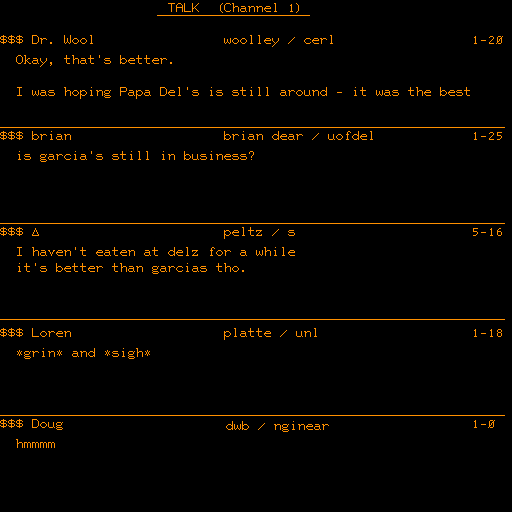
I think he thought I wasn’t going to be able to do any of that. But I went down there right away and signed up. I did a lot of things on the system staff there. I was involved with rewriting the email program that they had. The PLATO system had a lot more than just games. Because of the communication capabilities, it had the equivalent of group notes, email, online chat—all of that was part of PLATO. It did a lot of different things, and that led me down the rest of my career. Somebody would ask me, “Do you know how to do graphics?” And I could say, “Sure, I did graphics on this PLATO system.” “Do you know how to do system software?” “Oh, sure, I wrote system software for the PLATO.”
CG: As you say, PLATO was essentially there for educational purposes initially, but it very quickly became clear that there were students pushing it in the direction of gaming. What’s your first memory involving gaming on PLATO?
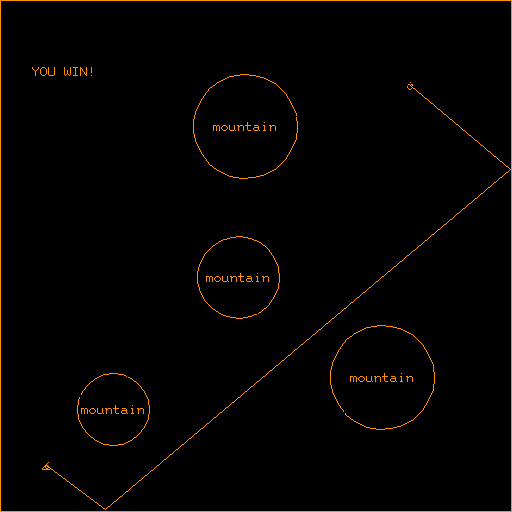
PR: I think the first game that I played was something called Moonwar. The PLATO had a little screen, and for Moonwar, they put three to five circles on the screen. You were playing against someone else, and the idea was that you had to shoot a laser at them. These circles were supposed to be mountains or something on the moon. But in order for you to hit the other person, because you could hide behind those circles, you had to put in an angle for your shot, and then it would bounce off the sides of the screen and hit something. It would stop if it hit one of the circles. That was my first interaction with gaming on PLATO. I was like, “Wow, this is really something.” It’s not like it was a very exciting game. You were doing math mostly. [laughs] “I think I’ll aim thirty-three-and-a-half degrees.” [laughs]
CG: [laughs] But you were going up against other real people at the time, right?
PR: Correct. I think that they made a computer-controlled player in case nobody else was there. But mostly you were going after other people.
CG: Was Moonwar turn-based? Like you’d enter the angle for your shot and let it go, and then the other person would take their turn?
PR: Exactly. It was turn by turn.
CG: Because the idea of video games as a medium didn’t exist at this time, I’m curious if you and others who were playing games on PLATO and starting to program games on PLATO, if you had some sense that video games were going to become a medium unto themselves? Or at the time was it more that it just felt like a toy? Like just something you were messing around with?
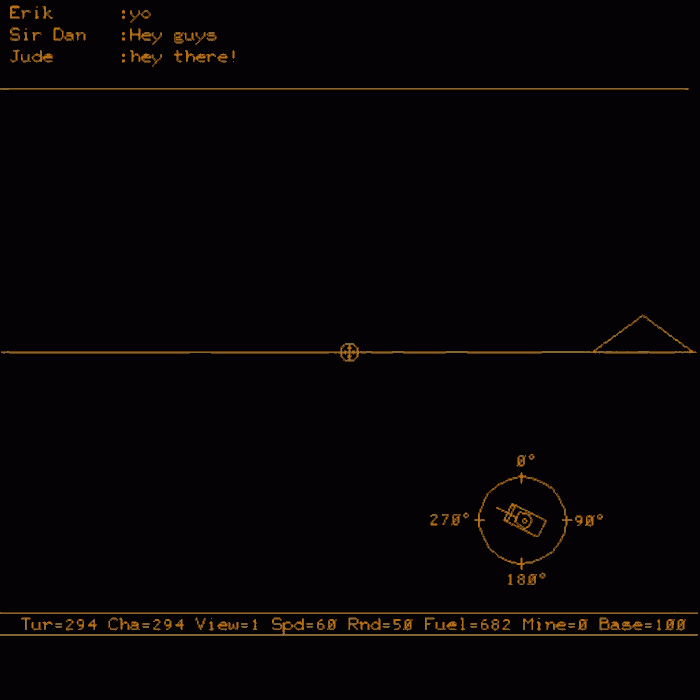
PR: Some of the stuff that people were working on was pretty cool. There was a tank war game where you actually got a first-person view out of the turret2. You were shooting at enemies, and it would actually rotate in almost real-time. Not really real-time, but pretty close. There was a flight simulator3 that actually did kind of fly realistically. There were a lot of things that really pushed the boundaries of what computing was at the time.
In fact, my first full-time job after college was with a company that became AT&T doing billing software. It was not very exciting at all. But I had to use punch cards for that job. After working programming on a screen with graphics for so long in school, it made me realize that the rest of the world had a long way to go.
Another interesting anecdote I have from then: I’d talk to my family after I’d come home from doing all of this stuff. I was still living at home for part of this time. I would tell them about email and chat and these kinds of things. This was in the mid-’70s. Twenty years later, the internet is coming around, and you get chat, and you get email and all of these things. I remember, my sister came to me and said, “Is this what you were talking about?” All of that was there on PLATO. It was pretty cool. And we knew it at the time.
CG: So at the time, when you were playing some of those early video games on PLATO, you already had this sense that there was something special there and not just a distraction?
PR: That’s right.
CG: When did you realize that rather than just playing games on PLATO, you wanted to program one of your own?
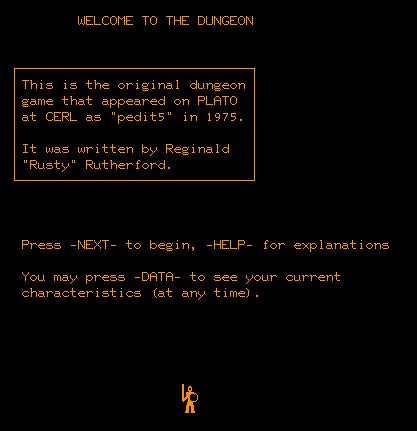
PR: I read your article about Orthanc, and yes, we had been playing pedit54, the original.
CG: Oh wow, you know what? It’s so funny hearing you say that. I’ve read the name pedit5 so many times and read so much about it while preparing to write about that game. But in my head, I’ve always pronounced it as “pedit5.” Hearing you say “p-edit 5,” it’s like... Of course! That makes so much more sense! Because it’s all named after the education programming. Sorry, this just unlocked a piece of knowledge for me!
PR: Right! And the name was because there was “p-edit 1” and “p-edit 2” and so on. Each of them were assigned to some person who could use it for something. This guy, Rusty Rutherford, decided to write a dungeon game. He was playing with it, and eventually, he stopped working on it. There were some things in there that he wanted to add but never got to. In fact, I have access to the original code for all of that stuff now. There were notes in there about what Rusty wanted to add to the game. “I’d like to be able to do this and that.”
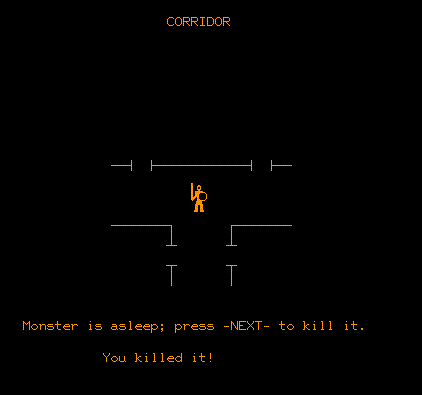
But Larry Kemp and Eric Hagstrom and I had been playing this game and talking about things. Larry and I were both at the University of Illinois in Chicago. He was the monitor for the lab that had all these PLATO terminals in it. I got to know him because of that. He played pedit5 and said, “We could do so much better. There’s so much more that you could add to fill it out and make it much more complete.” Pedit5 just had one level. You’ve played it, no doubt. It re-drew the screen every time you moved.
I had written a lot of other software for PLATO. So I said to Larry, “We don’t even have to do that. We can do other things.” We built this whole screen that was information-based. We decided more levels is better. We wanted more monsters. As you pointed out, we realized that we should have real monsters. Eric was mostly the guy who understood the Dungeons & Dragons side of things. He was the real D&D guy. I was the programmer. If you read through the help information, Larry wrote most of that. He sort of wrote the backstory. We all wrote code too; it wasn’t just me. And we were in two separate places. Larry and I were together in one place, and Eric was off in Indiana.
CG: I didn’t realize that you weren’t all on the same campus. That’s really fascinating. You communicated using PLATO?
PR: Yes, absolutely. I met Eric, I think, once in person. [laughs]
CG: While I’m researching these early RPG video games, I keep stumbling onto examples of like, oh, this must have been the first boss fight, or this must have been the first example of multiplayer. Hearing this, it strikes me that Orthanc may have been the first example of a remote development team in gaming. [laughs]
PR: But there were a lot of people working like that! I was writing software for different parts of the university. I wouldn’t necessarily be in the same room with people I was working with. I would be in one lab, and someone else would be in a different lab. Or I’d be working on system software when I was up in Chicago, and the main development was down in Urbana-Champaign. It was very natural, and it worked. All of those systems that were built around long-distance communication helped us do that.
There were, I think, five hundred PLATO terminals around that time. Maybe three hundred of those were in Urbana-Champaign, and the rest were in other parts of the country—Iowa and Indiana were big sites, many places in Illinois, the community college system in Chicago had many different labs. We were all over, and we didn’t necessarily know each other other than our online personas.
CG: We’ve talked a little about how PLATO and all of the elements of PLATO were in many ways very ahead of its time. It had all of these ideas that would come to fruition more in the future. One thing that struck me with Orthanc was the addition of multiplayer. You talked about Moonwar having multiplayer too, but multiplayer in a dungeon crawler RPG seems more daunting to implement—at least, from my perspective as somebody who doesn’t program. When did you get the idea to add multiplayer and how did you make that happen?
PR: When we were creating the game, we didn’t do it all at once. We didn’t sit down and write the game and then ship it. It was an iterative process, where we would add something, try out an idea, test it. We would find out, “Oh, you know, the odds for this are a little too high or a little too low.” “People are just dying here.” “Players are using this mechanic to get lots of points without doing much.” We were tweaking the whole thing as we went.
While we were doing that, one thing we did through the graphic system was drawing out what the map looked like on each level. It was a twenty-by-twenty-four-grid map, and it fit on the PLATO screen in a reasonable way. That’s how we originally built the mazes. Then we realized, now that we could see the maze, we could see where different players were in the game. We would watch the players move around. Then we realized, why not see where the monsters are and see where players run into them? Actually, we even got further, and we could drop a monster on top of a player live as well, just to see what happened.
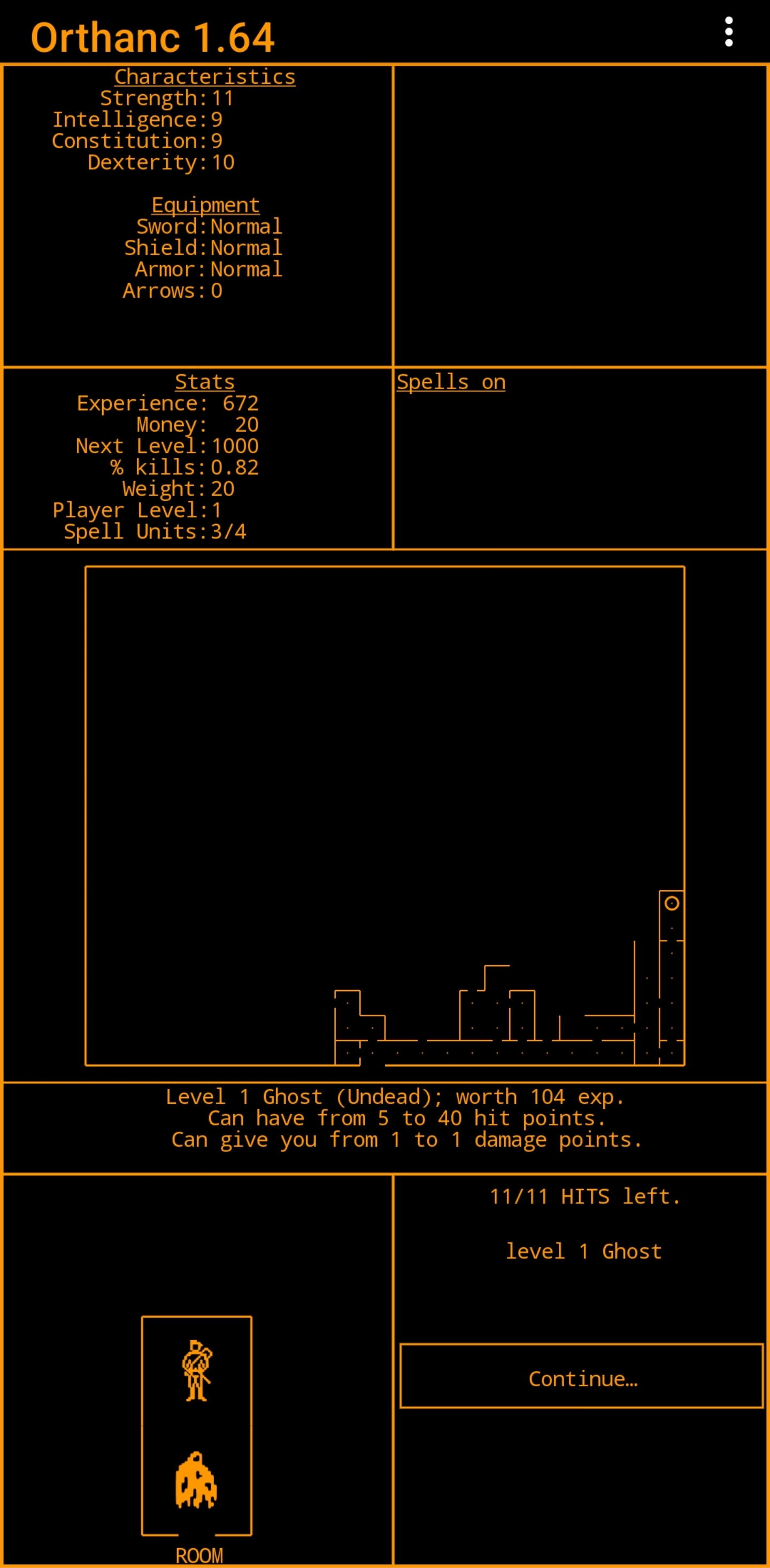
CG: Basically like a live dungeon master!
PR: Kind of, yes. [laughs] But we could see these players passing each other and not seeing each other. So we thought that we should be able to have them do something. Maybe they could beat each other up. So I wrote the code to allow for that.
There were three choices when you encountered another player: You could try to run away from them, try to fight them, or talk to them. Talking was something that you could do at any point anywhere on the PLATO system. You could always talk to somebody; it didn’t need to be in our game. But I can’t tell you how weird it was to watch people bump into each other and just hang out and talk. I wasn’t watching the conversations, but we could see that they were just sitting there in the talking loop, just sitting there for hours, it seemed like. They could have been somewhere else on PLATO doing the same thing, in other software. But the fact that they bumped into each other in Orthanc...
It’s funny, I actually did this on Cyber15. Somebody had told me, “Hey, this thing in the game doesn’t seem to be working right,” so I logged on to try it out. I walked into the dungeon and bumped into somebody and chatted. The guy was freaking out, like, “Oh, you’re the author! Oooh!”
So with Orthanc, it’s not that we specifically thought, “Let’s add multiplayer!” It was more like watching the players live in the maze and wondering, “Why wouldn’t they run into each other?”
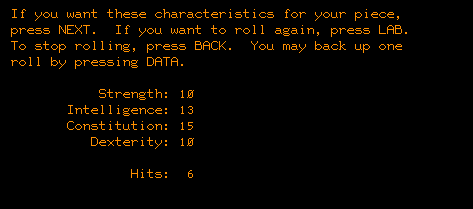
CG: It sounds more like bit by bit, as you had the tools, you realized, “Wait a second. We could do this.”
I’m really an engineer, and I like writing video games more than I like playing them. For sure, writing them is much more interesting to me. I ended up going to Atari for the same reason. I ended up working on an arcade game while I was there. I’ve always liked writing games. That’s like Dungeons & Dragons for me. [laughs] Going in there and finding and killing the problems, and all the rest of that.
After we had gotten Orthanc into more or less a solid state where we liked it, the three of us—Eric and Larry and I—got together at my house in a suburb of Chicago and tried to come up with an idea for a new version. The new version would have been much larger. There would be more than one dungeon, and you could go from town to town. Of course, there were other games on PLATO by this time that had elements like that. We were seeing some of those things too. We came up with some ideas for how all of it would work, including the idea of people being able to play together as a group, as a party. But we never wrote it. I think I still have a document somewhere from the ideas that we had for it.
We only got as far as thinking about those ideas, though. Larry graduated, and I was offered a job, so I ended up going off to do that. It just never happened. We were talking about doing that next step of really having groups together, but I think that really came as much from the other games that were on the system already where you could kind of hang out together.
CG: That brings me to some questions about your career after you were in college and after you worked on Orthanc. You mentioned that you worked on an arcade game with Atari. What game was that?
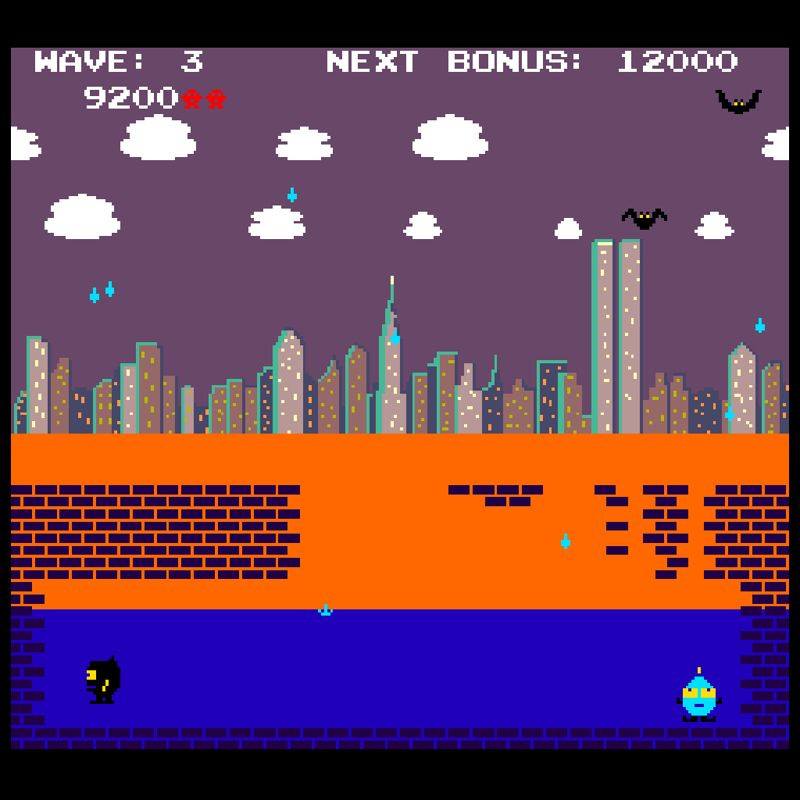
PR: It was called Cloud 9. It never went anywhere at the time. This was in the heyday of arcades. Atari at that time decided that if a game was put into one arcade in Silicon Valley for a week and made more money than all the rest of the games in that arcade, it was a hit. But the converse, they decided, was also true: If it didn’t make more money than the rest of the games in that one arcade across one week, it was not a hit. Even though, if you know anything about statistics, you know that that’s not enough sampling. [laughs] I actually had a statistics background, so I went in and said, “You know, we should try this a little bit more, in more places, and see what it’s like.” They basically wrote me off and said, “We know what we’re doing.”
I had written Cloud 9 in six months, and at the time it was taking two years for most people to write games. So Atari thought I could just write another game right after that. If you search for Cloud 9, somebody on YouTube has recorded their playthrough of it.
There was only ever one cabinet produced. It’s sitting in my son’s garage right now. He played it. It was fun. It wasn’t a very exciting game. It was sort of a cross between Breakout and Space Invaders. It was amusing. In fact, I’m in the middle of—in the same way that I released Orthanc on Android and iOS6—I’m working on a version of Cloud 9 for Android and iOS, just for fun.
CG: I’ll look forward to checking that out. I mentioned this when I first reached out to you, but I’m so grateful that you put Orthanc on Android and iOS. Obviously, the Cyber1 system exists to let people emulate PLATO, but it’s great to have this piece of RPG history more readily, easily available in that format on Android. I really enjoyed playing it that way.
So after college, you went and worked with Atari. It sounds like it was maybe not the best experience for you. Is that when you decided to move more into the more general tech engineering space rather than focusing on game development?
PR: I’ve always been a general engineer. The work I did on PLATO included email systems, graphics drawing tools, some of the system software, a whole bunch of educational software. I worked on all of that stuff while I was there. From there, my first full-time job was with a telephone company—Illinois Bell Telephone, as they were known at the time—writing billing software. So when somebody would make a phone call, my software would help figure out what we wanted to charge them for it. It was not very exciting work, but they paid a lot.
I knew somebody who was working at Atari. He gave my resume to somebody. They happend to be in downtown Chicago, where I was working for the phone company, and they invited me to dinner to talk to them. I had graphics and other kinds of software in my background already, so this Atari representative was like, “Wow, you could probably write arcade video games.” They were little 8-bit processors, which were sort of the other end from what I’d been working on. But I said, “Sure, why not?” So I did that.
After I created Cloud 9, a group within Atari was working on a new computer. At the time, there were the original video game consoles. There were also a couple of home computers that Atari had. They were working on a new version of one of those computers, and I joined that group to work on the operating system for that computer. It was a different direction but within the same company.
Unfortunately—I remember, we had T-shirts when I worked for the coin-op division of Atari. The T-shirts read, “Coin-Op: The Real Atari.” [laughs] Everybody in the world thought of the home consoles when they heard the name Atari, but the consoles never made any money. The arcade games made a lot of money. So Atari actually collapsed. It ended up being bought by the people who ran Commodore, the Tramiel family7. They basically laid everybody off.
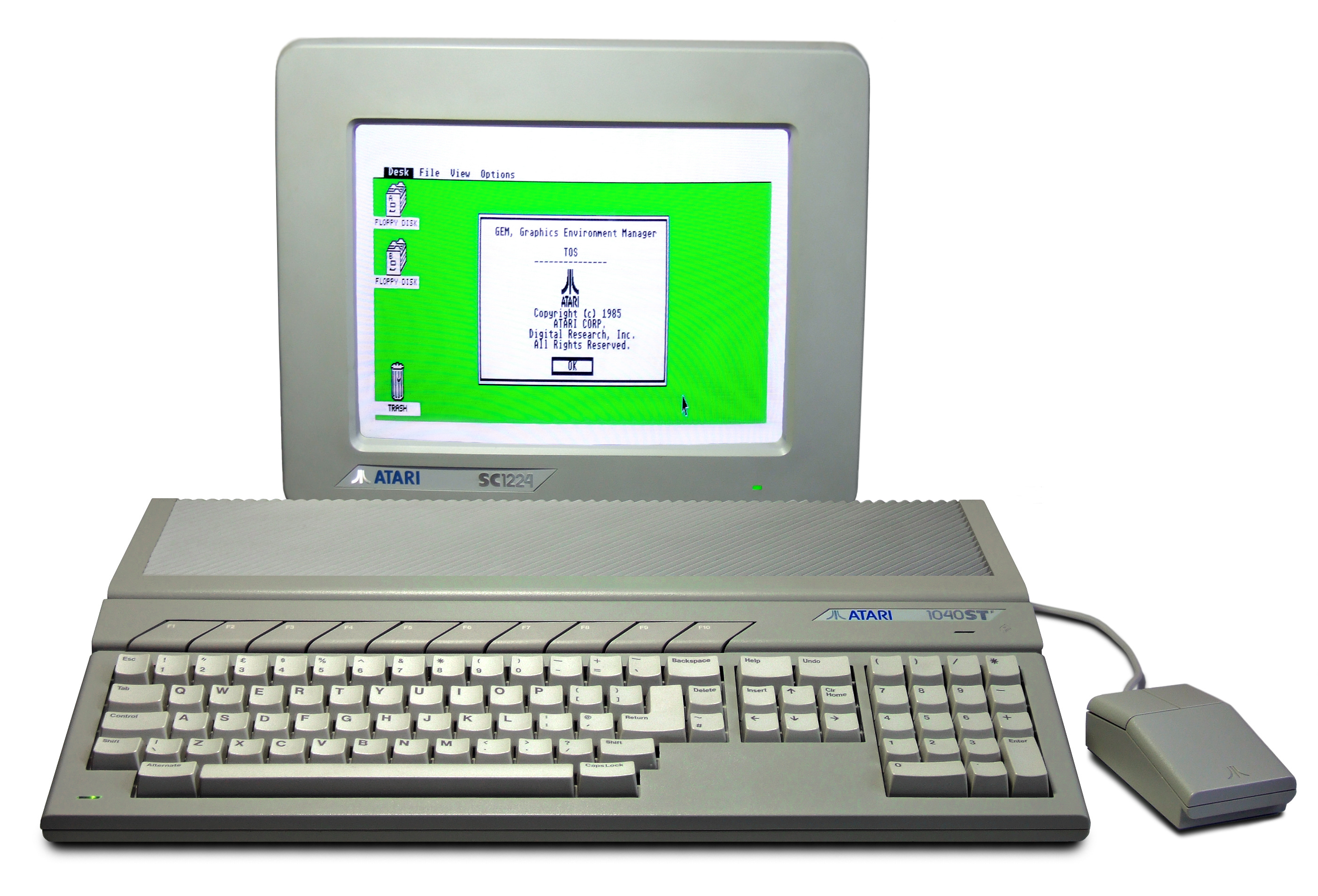

CG: So you were at Atari during the collapse?
PR: Yes. I was one of the layoffs. I found a job working for an educational software company, a little company out here run by a Stanford professor. The company was called Computer Curriculum Corporation. They were using text-only terminals connected to mini-computers to teach basic skills—math and reading. But they wanted to expand beyond “two plus two.” They wanted to teach geometry. Well, you can’t teach geometry very well on an ASCII8 terminal, so they wanted to do graphics. They hired me because not only had I worked on educational software, but I also knew how to do graphics. So I helped set them up to be able to use graphics. That was several years’ worth of work, including building file systems that were shared across the terminals. I wrote the drawing tools that they used to draw pictures on the hardware.
Computer Curriculum Corporation ended up being bought by Simon & Schuster, the book publisher, who was owned by Paramount. Paramount decided that they should actually take advantage of this technology and created a technology group in Silicon Valley to explore possibilities for all of the Paramount content and how it could be expanded on formats like CD-ROM.
There wasn’t a lot on the internet at this point in time. It was just coming into existence. I actually registered “paramount.com” as a domain. All of Paramount’s email went through the building that we had there at the time. I created the first version of the website for Star Trek: Voyager, the TV show. If you go back to some of the archived versions of that website, there was a quiz that you took. Paramount didn’t want us to have a credits screen on the website, but if you went in to look at the list of people who had taken the quiz, the names of the people who put the site together are there. My name is on that list. I wasn’t the content guy. I didn’t do any of the drawings or any of that stuff. I just built the tech behind it.
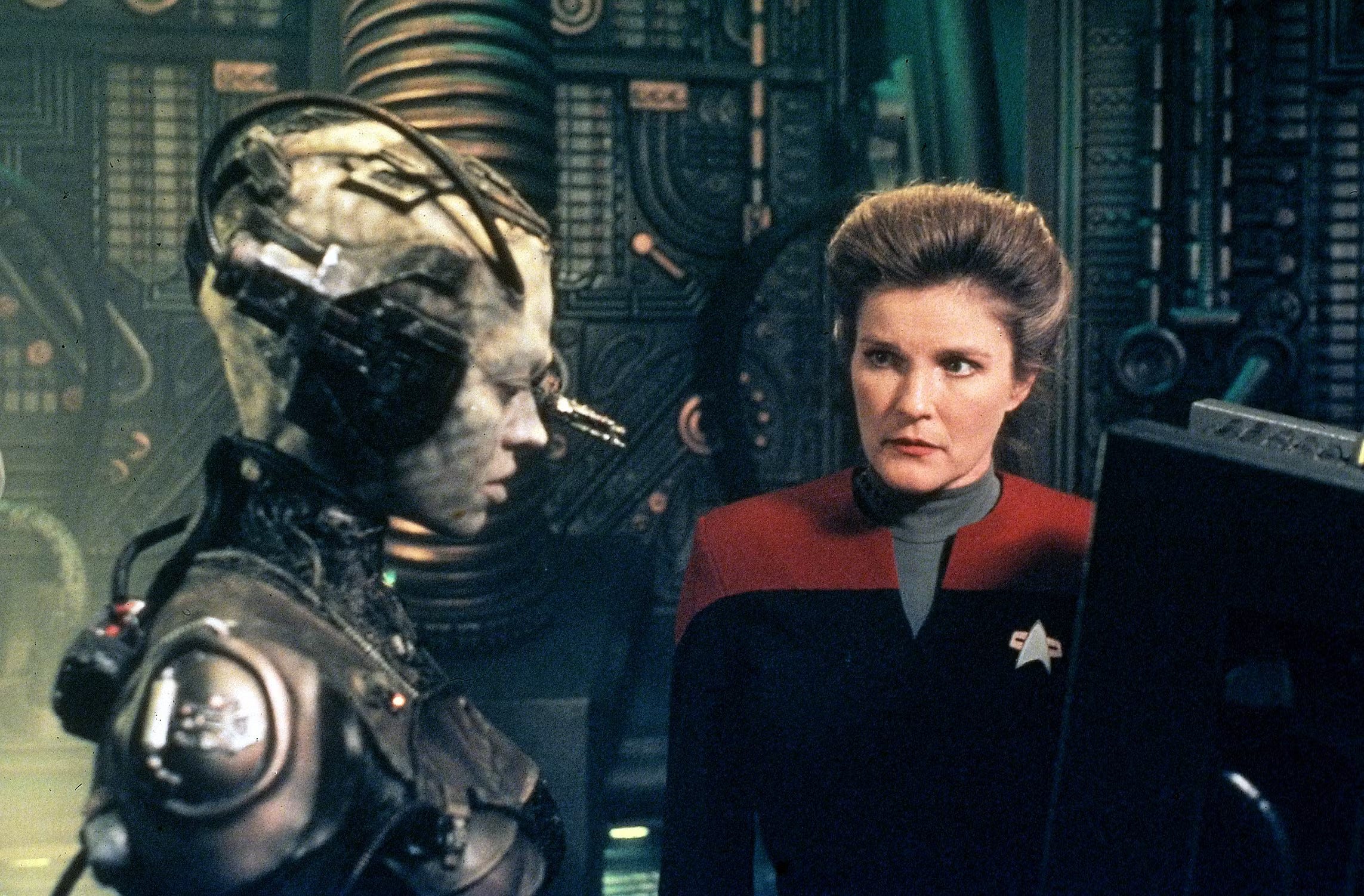
Then Viacom merged with Paramount and decided that the technology group needed to be in New York, because they didn’t want to be so far away from controlling such a thing. So they said, “Either you move to New York, or you’re being laid off.”
I said, “Okay, well, no, I’m not moving to New York.” So the last thing I had done for them was building websites. We’d also done some prototypes for interactive television shows. We were trying to figure out how to let the audience interact using a cable system. We had this idea of using multiple cable channels to interact and choose the next step, and it would stream different outcomes. It was an interesting idea, but it never really went anywhere. The technology wasn’t ready for it.
So I went from doing that kind of work to joining Apple. I knew somebody at Apple. They said, “You should hire this guy.” I went in there, and the first thing I did at Apple was to rewrite the interrupt handler for MacOS. So I went from about the highest level of software web interface stuff from being all the way down at the bottom of the operating system.
I love that story, because it shows—I’m interested in sort of the whole picture. I like all of that stuff. None of it was something that I didn’t want to do. I’ve done applications. I’ve done apps for phones. Games. Business software. Development tools. Whatever it is.
I did a whole bunch of operating system stuff for Apple, and then after thirteen years there, I joined Google and was working on operating system stuff for their data center. The last thing I did before I retired is that I was responsible for security and privacy for ChromeOS, the operating system.

.jpg)
CG: So just a couple of small companies you worked for there. You know, Apple and Google, tiny little companies.
PR: And all over the place! That’s kind of the way that I’ve been. Give me an interesting problem, and I’ll go after it. Games was certainly one of them. If you play or watch the video of Cloud 9, you’ll see how that game was much more interactive than Orthanc.
CG: You’ve mentioned that you’ve always enjoyed the programming side moreso than playing video games. Did you keep playing video games at all over the years?
PR: Yeah, I play a little bit now and then.
CG: Do you have any particular favorites, or anything that you’re playing right now that’s exciting for you?
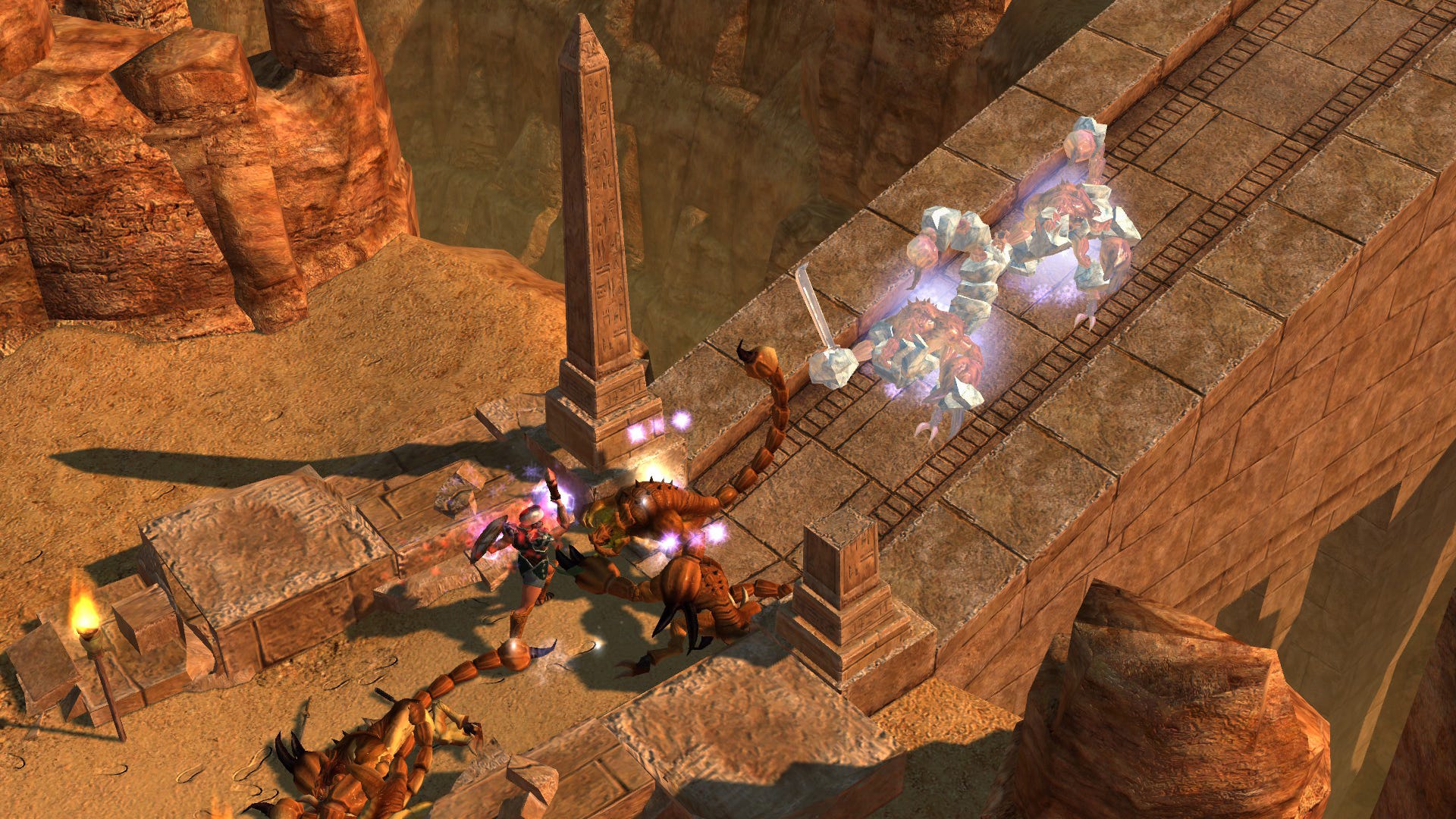
PR: I’ve been playing Titan Quest9. That’s very much in the Dungeons & Dragons style with all the classes and all the rest of that stuff. As I was working on porting Orthanc to Android, I was worried about the naming of the monsters, because there are rights with all of that, even though we had received a letter giving us permission through the mail. [laughs]
CG: [laughs] I did want to ask you about that too. So TSR, the publisher behind Dungeons & Dragons sent you a letter giving you permission to use the same monsters from the pen-and-paper game in Orthanc?
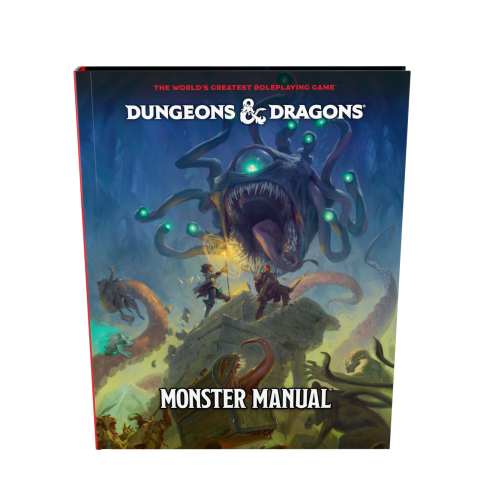
PR: The impression we got was that TSR didn’t really understand what we were asking about, but as long as we weren’t going to sell it and make money on it, they were okay with it. I think it sounded like this little niche thing to them, and it was. It wasn’t really a threat. It actually drove players to Dungeons & Dragons probably. It had that kind of positive feedback loop. But when I went through and looked at Orthanc, I realized there was only one monster name that essentially wasn’t allowed: an umber hulk. That’s a proprietary monster from Dungeons & Dragons, and we had that one. If you play Orthanc on PLATO, it’s still there. On the Android version, it’s a brown hulk instead. I just didn’t want to have anybody argue with me about it.
CG: That’s probably smart to just not have to worry about it.
PR: And I’m not making any money off of it! It’s a free game. But somebody could say that I’m taking away revenue that somebody else could make off that property. Yeah, maybe. But all the rest of the monsters were things that were either already established or had been allowed.
CG: Compared to some of the other early PLATO RPGs that I’ve played, I thought it was interesting that Orthanc had no final boss to overcome or no magical artifact to rescue to win the game. Was there any reason that you chose to have this more free-form approach to winning the game?
PR: Pedit5 didn’t have a final boss or goal either. People just wanted to make it to the Hall of Fame. They wanted to be the top-ranked person there. That was all that they cared about at that point. It wasn’t about accomplishing something within the game world. It didn’t seem like players needed that. There were other games that followed up that had the idea of having a more concrete goal, but I don’t think we ever had that in mind. Even the new version that we were talking about was not about having a quest. It was about conquering this space.
CG: I wanted to ask about the name as well. I know the word “Orthanc” comes from The Lord of the Rings. Did you envision the game as having more of a Tolkien-esque flair to it? Or was it just a name that you thought was cool?
PR: It was partly a name that we thought was cool. It actually was “Orthanc Labyrinth.” As you pointed out, Orthanc in The Lord of the Rings was a tower. So we wanted to call it “Orthanc Labyrinth,” but games were all named one word. The file name had to be ten characters or less. So it ended up being Orthanc, but the full name was The Orthanc Labyrinth inside the game. That’s why it wasn’t just the tower. It’s supposed to be the part under the tower.
I forget who—it wasn’t me. It was either Larry or Eric who came up with the name. They knew Tolkien. I had read The Lord of the Rings, but I wasn’t a giant fan. I wasn’t living and breathing Tolkien. I knew people who were. Since then, I’ve become much more aware, and I’ve read the books several times now. In fact, there’s a new book out, Tolkien in the Twenty-First Century, which is looking at implementations of his stories and how they’ve been affected and interacted with each other. It was interesting to read that too.
CG: It sounds like you rediscovered Orthanc on PLATO through the Cyber1 platform in the mid-2000s or somewhere in there?
PR: The early 2000s, yeah.
CG: When you rediscovered it, you immediately jumped in and started programming in new stuff. What made you decide to just jump right back in?
PR: I heard about Cyber1. Having been on the system staff for PLATO, I knew that I could help. There were a lot of things that were broken on Cyber1. We had no idea about how long PLATO would last. We weren’t thinking about the millennium. This was in the ’70s. It was a long time before the year 2000. The group notes and user groups that we had online had essentially four bits—sixteen years worth—of dates. [laughs] So they ran out of dates.
Space had been at a premium on PLATO. The size of Orthanc in terms of space on disc—right now, for us, it’s an error bit. You’d never even notice losing that much space. But back then, there was a real premium on space. We were very careful about how we used space. What I was doing for Cyber1 was not really focusing on Orthanc. It was how to help the system work better in the twenty-first century. I was fixing the tools that everybody had used so that they were all working reasonably.
As you’ve seen in the game, the visuals are orange and black. That’s because the plasma panel was invented for PLATO, and they happened to pick gases that made orange. Eventually, they came up with other-colored terminals. Color ended up being added, so that was another thing that I did for Cyber1. I went back and added color to some of the system tools that people could use.
After I did that, I thought, “Well, I could make Orthanc in color.” So I went in and added some color. It’s a little garish, I think. I was trying to stick with the primary colors. You could make it really nice, but most of it was close to the primary colors.
But while I was in there, I realized, “You know, I don’t remember this maze.” I had to go back and figure out how to see the maze layout. Then I thought, “Why didn’t we have a map that was there for players?” But I also didn’t want to force it on players if they want to get the original experience. So you actually have to ask for it. You have to press a key to bring it up. I wanted people to have that original experience without the new stuff if they wanted to see what it was really like just having to remember the layout or drawing the map on paper, which is what people did. But it didn’t take much to create the map.
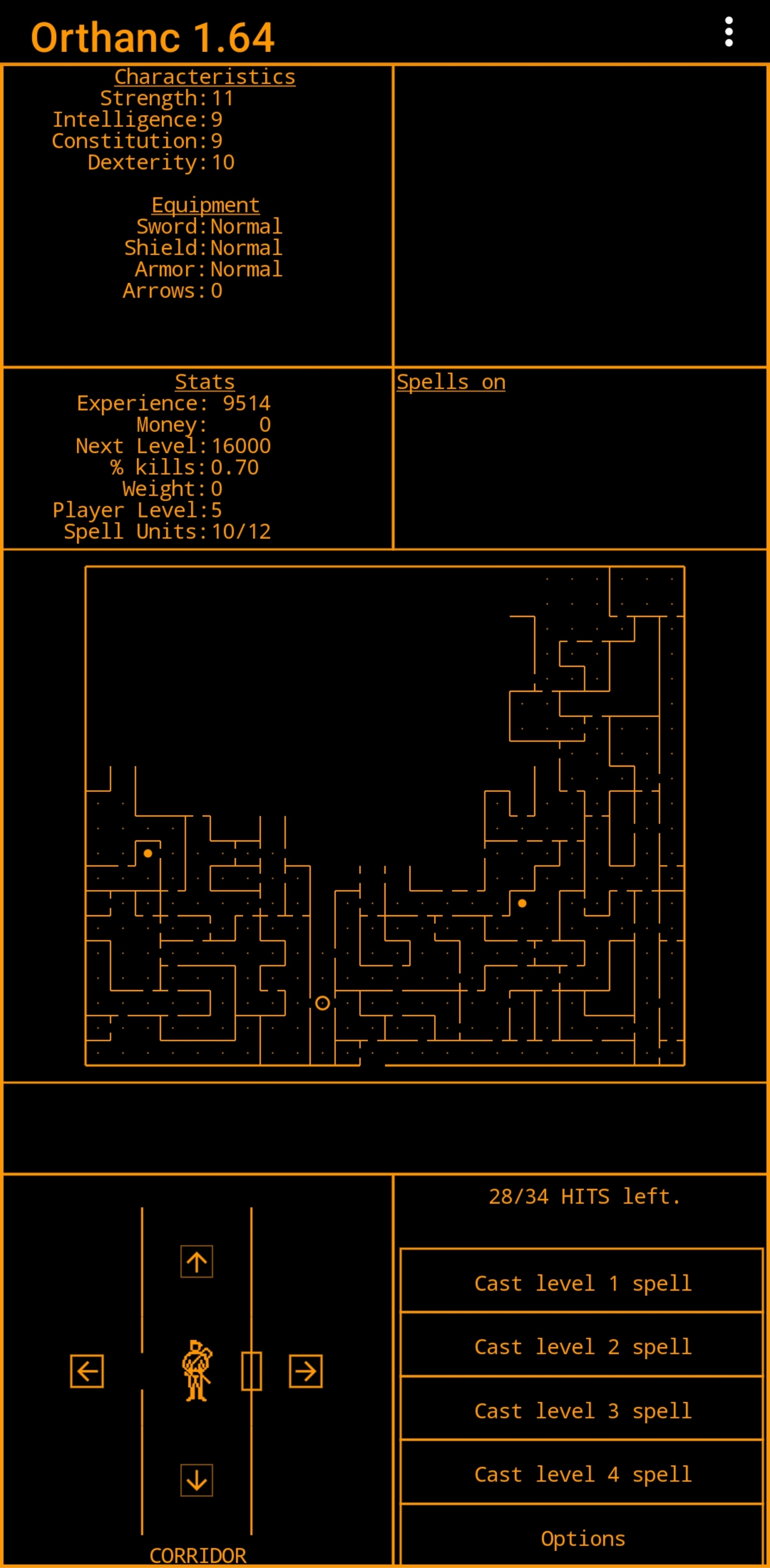
Again, I had to find space to store memory of where a player had been, because I only wanted the map to show that far. But TUTOR, the language of PLATO is actually pretty powerful. It wasn’t that hard to get back into it. I can’t tell you how many programming languages I know, because I don’t know how many I know. I learned Swift to create the iOS version of Orthanc. I pick up languages easily. It’s not a big deal for me. Walking back into a language that was, at that point, something I’d learned thirty years or more earlier, it wasn’t that hard to pick it back up again. And the language is pretty powerful, so I was able to make some changes. It really did only take a few hours to write that map.
CG: Have you made updates to the PLATO version of Orthanc beyond adding the auto-mapping feature? Or are there any updates that you’d like to do at some point?
PR: I turned on the ability for a monster to appear in a room at random. That had been turned off, but I turned it back on. Mostly, though, I wanted to keep it kind of the way it was. Mostly. I enjoyed the narrative that you can read through in the instructions in-game. It’s a little hokey, but it’s cute. I wanted to keep it that way.
There’s so much that I could do now if I was to try to write a new version of Orthanc. In fact, when I first put together the Android and iOS versions, I gave access to the app to Larry and Eric to let them try it out first. Larry’s first reaction was, “You’re writing Orthanc and not Orthanc 2? Why would you do that?!” [laughs]
CG: [laughs] Of course. I’d wanted to ask if you’d stayed in touch with Larry and Eric or reconnected with them at all.
PR: Larry came to my wedding years ago, back in the ’80s. He lives in the Chicago area. I’m here in California. We don’t really run into each other, but you know, I wished him happy birthday just recently. He’s still around. He hasn’t quite retired yet. Eric and Larry and I did a lot on Orthanc, but Eric wasn’t really involved with us other than that. I have his email address. I stay in touch with him. That’s how I reached out about the mobile version of the game. But no, I haven’t really followed up with Eric that much.
CG: Well, maybe once Larry retires, you two can get down to really getting Orthanc 2 out there.
PR: [laughs]
CG: You mentioned that you’re working on mobile ports of Cloud 9 as well. Once that’s done, would you like to make something new or make something that’s a follow-up?
PR: It’s funny. In my entire career at Google, I was an engineering manager, so I wasn’t really writing software. I was helping other people write their software. It was a lot of team-oriented stuff. It’s funny that when I was retiring, that’s what I said to the people who were on my teams: “I’m gonna retire, and I’m going to be doing your job.” Because I like it! I like writing software.
It’s an interesting idea. Like I said, I have the notes that Larry and Eric and I put together for what an Orthanc 2 might be like. It would be an interesting thing to explore at some point. I don’t know. It might be interesting to see. I hadn’t thought about getting Larry involved in it again, but he might get a kick out of that too.
In my retirement, I also have a two-and-a-half-year-old grandson, and we just got a German shepherd. He’s now eight months old, so I’m spending a lot of time training him. He’s in full puppy mode. It’s sort of like having two toddlers in the house at the same time. So that’s keeping me busy right now, but yes, for sure I’m not hanging up my engineer shingle and putting it away.
CG: It certainly comes across from talking to you that you love doing that programming side of things. If you’re enjoying it, even if you’re retired, if it’s not actually a job for you and you’re just having fun...
PR: Right. Nobody’s doing code reviews on me and telling me, “No, no, no, you can’t write it that way.” Yes, I can!
CG: Well, by all means, please, if you ever do end up working on any future games, please feel free to reach out and I’ll let Cartoon Ghost’s readers know. I really appreciate you taking the time to talk with me. I’ve really enjoyed checking out Orthanc and learning about this piece of RPG history.
PR: There’s been a whole lot of questioning over what was the first RPG on PLATO. Pedit5 was, as far as I know, really kind of the first one. It was the only one that was around at all. Orthanc was very derivative directly from the idea of pedit5. We had talked to Rusty about it and asked, “Can we use these ideas?” He said, “Oh sure, no problem.”
In your post on Orthanc, you pointed out that Mark Nakada did the character set for the game. He did the character sets for other games as well, but we asked him to create these. We would say, “We need something that looks like it would have this name,” and he came up with all of these. It was excellent. All of that stuff, where that came from, was really a special time. It kicked off my entire career.
There are so many people who came out of that space. Ray Ozzie, the CTO for Microsoft for a while10, was in school when I was there. Lotus Notes, which Ray Ozzie helped create, was based on ideas from PLATO. The people who worked on PLATO went across the entire tech industry and no doubt had an impact on everything. It was a very formative thing. You’ve probably read The Friendly Orange Glow?
CG: Yes!11 I devoured that book a few years ago when I was first starting to do research into this project. That was one of the first things I picked up. That history is so incredible. And as a Midwestern boy myself, it was kind of fun realizing that all of this tech stuff really kicked off here. It wasn’t in Silicon Valley.
PR: That book is pretty close to reality. It was kind of amazing. One other chapter in that book was about a mahjong game. The guy who wrote it was a quadriplegic, and he actually wrote the game on PLATO with a pencil in his mouth. I remember playing that game and thinking, “Wow, that is pretty cool.”
As I was reading The Friendly Orange Glow and was reminded of that game, I said, “Well, there must be an Android version of mahjong.” Every single one of them was ad-driven. I couldn’t buy one! I would’ve paid for one. I hate ads even though I worked for Google. So I said, “Well, I can write one.” So I actually have an Android and iOS version of mahjong12 based on the one from PLATO. It’s been fully colorized, as opposed to the PLATO version, which was just orange and black. But at the end, if you win a game, it draws an orange-and-black dragon, which the developer had drawn originally himself.
CG: I will definitely check those out! Thank you again, Paul.
CG: Fortran is an early programming language created by IBM in the 1950s. You can read more about it in this Wikipedia entry.
CG: I believe Resch is referring here to Panther, one of the earliest first-person tank simulation games and reportedly a major inspiration for future hit titles like Battlezone. Check out Panther’s MobyGames page for more information.
CG: Important context note here for my incoming interruption: In this conversation Resch pronounces pedit5 as “p-edit 5.” This may be obvious to smarter readers, but not to me, friends.
CG: If you haven’t read earlier Cartoon Ghost entries or forgot, Cyber1 is the fantastic PLATO emulation server that is still up and running to this day, and through which you cvan still play games like Orthanc and dnd. I strongly recommend checking it out if you’d like to take your own tour of video game and technology history.
When I wrote about Orthanc previously, I mistakenly thought the recent mobile port of the game had been for Android only. Thankfully, Resch corrected me on this point! So if you’re on an Android device, you can check out Orthanc on Google Play, or if you’re on an iOS device, you can check it out on the App Store. In both cases, the game is free and very fun, so go experience some gaming history! Sadly, the mobile versions of Cloud 9 don’t appear to be available yet as of the time of publication of this interview.
Here, Resch is referring to Jack Tramiel, founder of long-time Atari competitor Commodore, who purchased Atari from Warner Communications in 1984. You can read more about Tramiel’s history on his Wikipedia page. And if you’re interested in even more of the backstory on the rocky journey of Atari, including some really fascinating anecdotes about Jack Tramiel and his sons, I strongly recommend listing to Jamie Loftus’s ten-episode podcast, The Legend of SwordQuest. It’s very well-researched and entertaining, even for less hardcore gaming history buffs.
ASCII stands for American Standard Code for Information Interchange. Basically, ASCII means basic text characters in electronic communication. A text-based game or a “picture” made from regular text characters could be said to be presented in ASCII.
Titan Quest is a Diablo-style action-RPG developed by Iron Lore Entertainment and initially published by THQ in 2006. Despite its age, the game remains popular, with an expansion pack having been released as recently as 2021. A sequel, Titan Quest II, was announced in 2023.
Specifically, Ozzie served as the chief technical officer and chief software architect at Microsoft between 2005 and 2010.
In fact, not only have I read this excellent history of PLATO by Brian Dear, but it’s on The Codex Recommended Reading List!
You can check out Shanghai on Android via the Google Play Store, or Shanghai Mah-Jongg on iOS via the App Store.